
Review
APALA DISCO REMIX: THE REIMAGINATION OF TRADITIONAL APALA THROUGH CONTEMPORARY POPULAR MUSIC
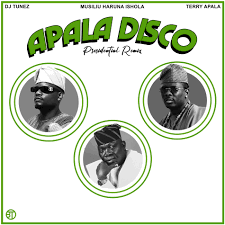
The evolution of Nigerian popular music has continued to demonstrate the capacity of contemporary artists to revisit indigenous musical traditions and reposition them within modern sonic expressions. Apala Disco (Remix) by Terry Apala, featuring Wizkid and Seyi Vibez, presents an interesting example of this intersection, bringing elements of traditional Apala music into a contemporary Nigerian popular music framework.
At the heart of the composition is its engagement with the rhythmic and instrumental identity of Apala music. The use of talking drums and shekere, particularly the shaker patterns, provides an important rhythmic foundation for the song. These instruments do more than establish a beat; they preserve an identifiable connection to the traditional Apala sound while creating a rhythmic environment that accommodates the contemporary production approach.
The talking drum is particularly significant within this musical arrangement. Its expressive tonal possibilities and conversational rhythmic character are essential features of Yoruba musical traditions. Its presence gives the composition a distinctive indigenous character, reinforcing the relationship between traditional percussion and contemporary popular music. The shekere, meanwhile, contributes a consistent rhythmic texture, helping to sustain the groove and maintain the song's forward movement. The interaction between these percussion elements creates a rhythmic foundation that is both culturally recognisable and accessible to contemporary listeners.
Another interesting aspect of the composition is its vocal interpretation. Terry Apala's vocal nuances and stylistic approach provide an important connection to the Apala tradition. His vocal delivery carries elements of indigenous musical expression, particularly in the phrasing, tonal inflections and rhythmic relationship between the voice and percussion. His approach is not simply about singing over an instrumental arrangement; it reflects a vocal tradition in which the voice participates actively in the rhythmic and expressive character of the music.
The collaboration with Wizkid and Seyi Vibez introduces additional vocal dimensions. Each artist brings a different interpretative quality to the composition, creating a blend of vocal identities that reflects the diversity of contemporary Nigerian popular music. Terry Apala provides the central stylistic connection to the Apala tradition, while Wizkid introduces his characteristically melodic contemporary pop sensibility. Seyi Vibez contributes another vocal texture, drawing from his own distinctive approach to melodic phrasing and indigenous musical influences.
The success of this collaboration lies partly in the accessibility of its melodic structure. The melody is relatively simple, memorable and built around repetition. This approach is consistent with the conventions of contemporary Nigerian popular music, where melodic familiarity, rhythmic consistency and recurring vocal phrases often play an important role in audience engagement.
However, simplicity in musical composition should not necessarily be confused with a lack of sophistication. A repetitive melodic structure can be highly effective when supported by thoughtful instrumentation, appropriate rhythmic development and a coherent arrangement. In Apala Disco (Remix), the relationship between the melody and the instrumental arrangement gives the song a recognisable musical identity. The repetition helps establish familiarity, while the percussion and vocal variations sustain its rhythmic appeal.
From an arrangement perspective, the composition demonstrates a reasonable understanding of musical balance. The instrumental elements are sufficiently structured to support the vocal performances without overwhelming them. The traditional percussion provides the rhythmic foundation, while the contemporary production framework makes the composition accessible within the broader soundscape of Nigerian popular music. This balance is particularly important in musical reinterpretations of indigenous genres, where the challenge is to introduce contemporary elements without entirely displacing the cultural characteristics that give the original musical tradition its identity.
Nevertheless, while the musical arrangement and vocal collaboration offer considerable appeal, the lyrical content presents an area where the composition could have achieved greater depth. The lyrics could have explored more substantial thematic ideas, developed a stronger narrative or offered more memorable lyrical observations. Given the richness of the Apala tradition, particularly its historical relationship with social commentary, storytelling, proverbial expression and everyday cultural experiences, there was an opportunity to draw more extensively from this lyrical heritage.
This is not to suggest that every contemporary popular song must carry an elaborate narrative or profound philosophical message. Music also serves the purpose of entertainment, dance and collective enjoyment. However, when a composition draws inspiration from a tradition with such a rich history of lyrical and cultural expression, the possibility of combining rhythmic accessibility with greater lyrical substance becomes particularly compelling.
Ultimately, Apala Disco (Remix) represents an interesting meeting point between indigenous musical identity and contemporary Nigerian popular music. Its use of talking drums and shekere, Terry Apala's vocal nuances, and the complementary contributions of Wizkid and Seyi Vibez create a musical experience that connects traditional rhythmic expression with modern popular appeal.
The composition succeeds in presenting Apala-influenced instrumentation within an accessible contemporary melodic framework. Its principal strength lies in its rhythmic identity, vocal blend and carefully structured instrumental foundation, even as its lyrical dimension leaves room for greater artistic exploration.
The broader significance of the song lies in the continuing conversation about the place of indigenous Nigerian musical traditions within contemporary popular culture. Such reinterpretations demonstrate that traditional genres need not remain confined to historical preservation. They can evolve, interact with new musical influences and find relevance among changing audiences.
The challenge, however, is to ensure that in making indigenous music commercially accessible, its deeper musical and lyrical possibilities are not lost.
Reviewed by Oscar Enamino