
Review
Asake’s “Sungba Remix” Featuring Burna Boy: A Study in Rhythmic Identity and Vocal Exchange
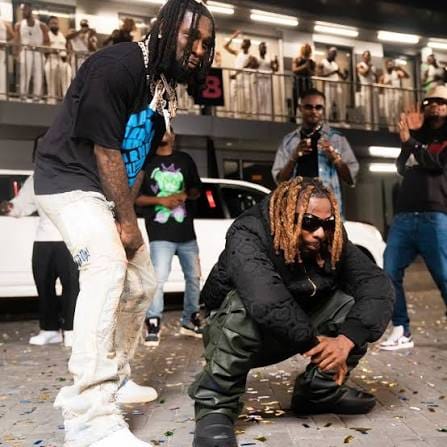
In this critical review, I examine Asake’s Sungba Remix featuring Burna Boy, focusing on its Amapiano-rooted rhythm, vamping piano chords, Fuji-inspired vocal embellishments, percussion and the artists’ code-switching between Yoruba, Pidgin and English. I also explore the contrasting vocal approaches of Asake and Burna Boy, including the distinctive vocal slur and rhythmic pulse that mark Burna Boy’s entrance.
Asake’s Sungba Remix featuring Burna Boy offers an interesting meeting point between contemporary Afrobeats, Amapiano-influenced rhythm and Yoruba musical sensibilities. Beyond its commercial appeal, the record demonstrates how arrangement, language, percussion and vocal character can be brought together to create a distinctly Nigerian musical expression.
One of the notable features of the production is its use of Amapiano as a rhythmic foundation. The groove provides the song with its underlying pulse while leaving sufficient space for the Nigerian melodic and rhythmic elements to emerge. Rather than allowing the Amapiano influence to dominate the identity of the record, the production uses it as a framework around which other musical ideas are developed.
The piano movement is particularly important to the character of the arrangement. The vamping piano chords create continuity within the groove, establishing a repeating harmonic foundation that supports Asake's vocal delivery and the rhythmic movement of the percussion. The repetition gives the track its hypnotic quality while allowing the vocals to remain central.
Another defining feature is the code-switching between Yoruba, Pidgin and English. This movement between languages reflects the contemporary Nigerian urban experience and gives the song an authentic conversational quality. The linguistic shifts are not merely lyrical choices; they become part of the rhythmic character of the performance, with each language carrying its own cadence and emphasis.
Asake's delivery draws heavily from Yoruba musical aesthetics, particularly in his use of Fuji-inspired embellishments. His vocal phrasing moves around the beat rather than simply sitting on top of it, creating a relationship between voice and rhythm that recalls the expressive qualities of traditional Yoruba popular music while remaining firmly situated within contemporary Afrobeats.
The percussion further strengthens this identity. Its marching, almost processional rhythmic character gives the groove a physical quality, helping to drive the song forward. The percussion does not merely accompany the vocals; it participates in establishing the movement and energy of the composition.
Burna Boy's entrance introduces another significant vocal dimension. The brief pulse immediately preceding his entrance creates anticipation before his voice enters the musical space. His characteristic vocal slur then becomes particularly noticeable, giving his entrance a contrasting texture to Asake's more rhythmically animated delivery.
This contrast between the two artists is one of the record's strengths. Asake's performance is closely connected to Yoruba rhythmic and vocal traditions, while Burna Boy brings his own distinctive vocal phrasing and contemporary Afro-fusion sensibility. Their approaches do not compete; rather, they create two different vocal colours within the same rhythmic environment.
The Sungba Remix therefore works not simply because two prominent Nigerian artists appear on the same record, but because the production provides enough musical space for their individual identities to remain audible. The Amapiano-rooted rhythm, vamping piano chords, percussion, Yoruba embellishments and multilingual vocal delivery collectively create a sound that is contemporary while remaining recognisably Nigerian.
From a critical perspective, Sungba Remix demonstrates how contemporary Nigerian popular music continues to evolve through the interaction of local musical traditions and global influences. Its strength lies in the way these elements are not presented as separate components but woven into a single rhythmic and vocal experience.