
Review
THE EXPERIENCE 2024: A SPECTACULAR GATHERING, BUT IS GOSPEL MUSIC PRODUCTION READY FOR ITS NEXT LEVEL?
A critical examination of musical excellence, performance quality, stage production, innovation and what the future should hold for Africa's biggest gospel music gathering.
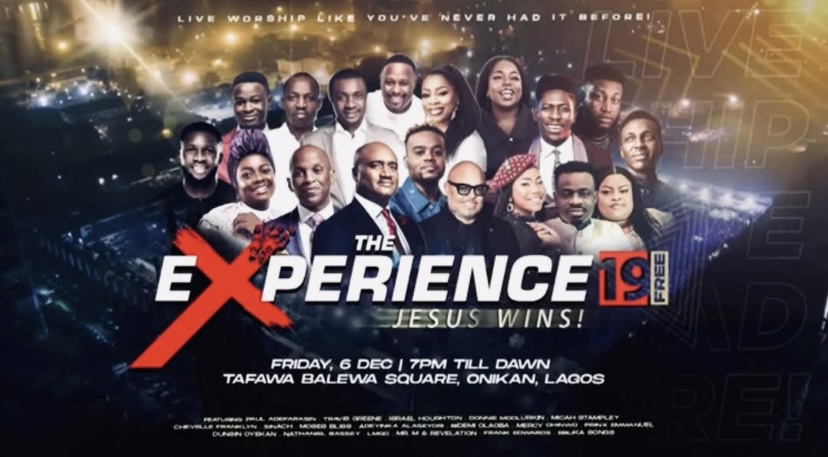
The Experience 2024, the 19th edition of the annual gospel concert organised by House on the Rock, once again demonstrated why it occupies such an important position in Africa's gospel music calendar. Held on December 6, 2024, at Tafawa Balewa Square, Lagos, under the theme Jesus Wins, the concert brought together an impressive collection of local and international gospel ministers.
From Nathaniel Bassey, Dunsin Oyekan, Sinach, Mercy Chinwo and Moses Bliss to Travis Greene, Donnie McClurkin, Israel Houghton, Micah Stampley and Chevelle Franklyn, the gathering represented an impressive diversity of musical identities.
However, beyond the impressive names, enormous attendance and spiritual significance, there is another conversation worth having: How good was the concert musically? How much has its production evolved? And what should audiences expect from an event of this magnitude going forward?
THE QUALITY OF THE CONCERT: A BIGGER STATEMENT THAN JUST NUMBERS
One of the greatest achievements of The Experience 2024 was its ability to assemble different generations, cultures and expressions of gospel music on one platform.
The concert was not restricted to one musical tradition. It accommodated contemporary worship, traditional gospel, Afro-gospel, reggae influences, Christian hip-hop and choir-driven praise.
This diversity was particularly important because it demonstrated that gospel music does not have to operate within a narrow musical identity.
The inclusion of Lecrae, for instance, brought Christian hip-hop into a gathering traditionally dominated by singers and worship leaders. Israel Houghton brought his internationally recognised contemporary gospel and praise approach, while Chevelle Franklyn introduced a distinctive Caribbean musical identity.
The Nigerian contingent provided another dimension, representing the increasing influence of African gospel music on the international stage.
Nevertheless, an event of this magnitude should not be judged exclusively by the number of ministers who appear on its programme. The real test is how effectively their individual contributions are translated into a cohesive musical experience.
The Experience must continually strive to become more than an assembly of celebrated gospel personalities. It should be a carefully curated musical production in which every performance contributes something distinctive to the overall experience.
THE MUSICAL PERFORMANCES: DIFFERENT IDENTITIES, DIFFERENT EXPERIENCES
Perhaps the most interesting aspect of the 2024 edition was the opportunity to experience different approaches to gospel music within one gathering.
Travis Greene represents an emotionally expressive contemporary worship style. His strength lies in his ability to build emotional intensity through vocal interpretation, phrasing and dynamic progression.
Donnie McClurkin brings a different kind of authority. His traditional gospel foundation, vocal projection, phrasing and emotional interpretation represent a generation of gospel music built around strong vocal leadership and lyrical conviction.
Israel Houghton brings considerable musical sophistication. His strength is not simply in singing but in the relationship between the lead vocalist, instrumentalists, rhythmic arrangements and supporting harmonies. His approach demonstrates how contemporary gospel can be musically complex without losing congregational accessibility.
Micah Stampley brings impressive vocal power, range and expressive ability. His approach represents the importance of vocal technique and the emotional possibilities of a technically capable gospel singer.
Among the Nigerian ministers, Nathaniel Bassey offers a distinctive worship identity through his trumpet, atmospheric arrangements and contemplative vocal approach. His musical expression demonstrates that instrumental identity can be just as important as vocal identity.
Dunsin Oyekan represents a more spontaneous and atmospheric approach to worship, with an emphasis on musical development, repetition and extended expressions.
Sinach brings the strength of memorable songwriting and congregational accessibility. Her music demonstrates the importance of melodies that allow thousands of people to participate without necessarily possessing advanced musical abilities.
Mercy Chinwo offers vocal agility, expressive phrasing and an energetic interpretation of contemporary African gospel.
Moses Bliss represents the increasing influence of youthful, contemporary gospel songwriting, while Limoblaze and Prinx Emmanuel bring Afro-gospel closer to contemporary African popular music.
Yinka Alaseyori and Bidemi Olaoba provide another important dimension through indigenous Nigerian praise expressions, rhythmic engagement and culturally familiar musical structures.
What makes these different identities valuable is that they do not all communicate worship in the same way.
Some depend on vocal intensity, others on musical atmosphere, lyrical accessibility, rhythmic excitement, instrumental arrangements or spontaneous expressions.
That is precisely the kind of diversity a major international gospel gathering should preserve.
However, there is an important distinction between having excellent individual ministers and achieving consistently excellent musical performances.
The standard should extend to vocal balance, instrumental precision, harmonic arrangements, transitions, backing-vocal coordination and the overall interpretation of each song.
A celebrated minister should not automatically translate into an outstanding musical performance. The quality of the musicianship, preparation and execution must also justify the reputation.
WHAT WAS NEW ABOUT THE EXPERIENCE 2024?
The 2024 edition offered some interesting developments beyond the usual assembly of gospel ministers.
1. A broader representation of artistic expression
The event also featured spoken-word minister IB Quake and a comedy segment involving Phage.
This introduced additional forms of artistic expression into the programme, suggesting that The Experience could accommodate more than musical performances.
2. A stronger emphasis on emerging and contemporary gospel voices
The inclusion of ministers such as Ebuka Songs, Limoblaze, Bidemi Olaoba, Precious Emmanuel and Prinx Emmanuel brought younger musical expressions into the gathering.
This is important because an event with such a long history must continually create opportunities for emerging gospel voices.
3. Improvements in sound quality and stage transitions
One of the encouraging aspects of The Experience 2024 was the noticeable attention given to sound quality and the smooth transition between gospel ministers.
For an event of this scale, where several artists with different musical identities, vocal characteristics and performance requirements share one stage, maintaining sound consistency is a considerable production responsibility.
The quality of sound reinforcement is fundamental to the overall experience. It determines how effectively audiences receive the vocals, instrumentation, harmonies and musical arrangements.
It is equally important that the transition from one minister to another does not interrupt the flow of the concert.
The 2024 edition demonstrated improvements in these areas, particularly when considered against previous editions. The movement between performances appeared more coordinated, contributing to a more continuous concert experience.
This is worth acknowledging because production excellence is not achieved in a single year. It is developed through consistent evaluation, investment, technical experience and a willingness to improve.
However, maintaining this progress should be a priority. The next level should involve even greater attention to vocal clarity, instrumental separation, stage monitoring, musical coordination and the overall listening experience, both for the audience at Tafawa Balewa Square and those watching remotely.
4. The economic scale of production
One particularly striking revelation came from Pastor Paul Adefarasin, who disclosed that the cost of organising the 2024 edition was approximately eight times that of the previous year, reflecting the economic pressures and depreciation of the naira.
This raises an important question about the relationship between production expenditure and production quality.
Spending more money does not automatically produce a better concert. What matters is how effectively resources are translated into superior sound, lighting, stage management, artist coordination, audience comfort and broadcast quality.
The Experience must continually demonstrate that its production investment is producing measurable improvements.
THE SHOW PRODUCTION: WHERE THE NEXT BIG IMPROVEMENT SHOULD COME FROM
The production of The Experience deserves as much critical attention as the musical performances.
At this level, sound reinforcement, stage design, lighting, visual presentation, broadcast direction and stage management are not secondary considerations. They are fundamental components of the concert.
The improvements in sound quality and stage transitions observed in 2024 are encouraging. They demonstrate that the production is evolving and that lessons from previous editions can translate into a better experience.
However, there is still room to make the production more sophisticated.
I would particularly like to see further development in the following areas:
Sound engineering
Although the improvements in sound quality are commendable, consistency should remain a priority. Every minister should enjoy a properly balanced mix that respects their vocal character and musical arrangement.
Lead vocals, backing vocals, instruments and choir should occupy their appropriate sonic spaces. The audience should hear clarity rather than simply volume.
Sound engineering should also account for the different musical requirements of each minister. A contemporary worship arrangement, an Afro-gospel performance and a traditional gospel presentation do not necessarily require identical mixing approaches.
Lighting and visual storytelling
Lighting should do more than illuminate the stage. It should complement the emotional direction of each performance.
A contemplative worship session should not necessarily receive the same visual treatment as an energetic praise performance.
The relationship between lighting, stage design and musical expression can create a more immersive experience.
Stage transitions and artist coordination
The smoother transitions achieved in 2024 are a welcome development. The next objective should be to maintain that consistency while making the movement between performances even more seamless.
The coordination of microphones, instruments, supporting musicians, stage personnel and incoming artists should be handled with precision.
At this level, even small interruptions can affect the continuity of a live production.
Broadcast production
Since millions of people also experience the concert remotely, television and livestream production should receive the same attention as the physical stage.
Camera angles, close-ups, audio balance, graphics and switching should communicate the atmosphere of the event effectively.
The broadcast experience should not feel like a secondary representation of the concert. It should be an equally compelling production in its own right.
Artist and band coordination
Every performance should have sufficient preparation, musical direction and technical coordination.
The quality of the backing band, choir and supporting vocalists should never be treated as an afterthought.
A major gathering such as The Experience should continually demonstrate the importance of musicianship, rehearsal discipline and artistic preparation.
WHAT SHOULD WE EXPECT FROM THE EXPERIENCE 2025?
The 20th edition should not simply be another anniversary celebration. It should represent a significant statement about how far The Experience has developed and where it intends to go.
With the announced theme, Jesus United, the next edition presents an opportunity to expand the musical and cultural vision of the concert.
Here are some improvements I would particularly like to see.
1. More intentional international collaborations
Rather than simply inviting international ministers to perform individually, the organisers should explore specially arranged collaborations between African and international gospel artists.
Imagine a carefully rehearsed musical collaboration between a Nigerian gospel minister and an American or Caribbean gospel minister, with both musical identities preserved.
Such collaborations could produce some of the most memorable moments in the history of the concert.
2. More attention to musical direction and arrangement
I would love to see more specially developed arrangements for the event rather than performances that simply reproduce familiar versions of already released songs.
New introductions, instrumental interludes, carefully constructed transitions, choir arrangements and creative medleys could make the concert more distinctive.
3. A stronger platform for emerging gospel talents
The Experience has an opportunity to become an even more influential platform for discovering and introducing exceptional gospel musicians.
Emerging singers, instrumentalists, songwriters, choir directors and music producers should have opportunities to demonstrate their abilities.
The future of gospel music depends not only on celebrating established names but also on creating opportunities for the next generation.
4. Greater sophistication in live sound and broadcast engineering
I would like the 2025 production to build on the sound improvements achieved in 2024, paying particular attention to vocal clarity, instrumental separation, backing-vocal balance and the overall listening experience.
An event can have an impressive stage and enormous attendance but still fall short if the sound does not communicate the quality of the performances.
5. More creative use of technology
There is room to explore more sophisticated visual production, LED integration, stage automation, camera technology and immersive broadcast experiences.
Technology should support the message and musical expression rather than distract from them.
6. Better musical programming and performance sequencing
The order of performances matters.
A carefully curated concert should consider musical tempo, emotional progression, audience energy and the relationship between different musical identities.
The transition from an intimate worship session to energetic praise should feel intentional rather than accidental.
The programme should have a musical journey, not simply a succession of performers.
MY CONCLUDING THOUGHT
The Experience 2024 was an important demonstration of the influence, diversity and international relevance of gospel music.
Beyond the production, the performances and the enormous gathering of people, its greatest significance remains the opportunity it creates for people from different generations, cultures and backgrounds to come together in worship and celebrate Jesus.
Its improvements in sound quality and the coordination of transitions between ministers also deserve recognition. These are important indicators of a production that continues to learn, adapt and improve.
However, I believe the greatest challenge facing The Experience is not how to attract bigger names or accommodate a larger crowd. It is how to continually improve the quality of the musical and production experience while preserving the spiritual purpose at the heart of the gathering.
There is a difference between organising a large gospel concert and producing an exceptional live musical experience.
The latter requires deliberate musical direction, excellent sound engineering, intelligent programming, creative arrangements, disciplined stage management and an uncompromising commitment to excellence.
The Experience has already established the platform. The next responsibility is to keep raising the standard.
My expectation is simple: let every new edition be better in musical execution, production quality, artistic creativity and audience experience than the previous one, while remaining true to the message it exists to communicate.
Because when an event becomes this influential, excellence should not merely be an ambition. It should become its standard.
And perhaps that is what The Experience should carry into its next chapter: not just a bigger gathering, but a better musical experience that continues to glorify Jesus.